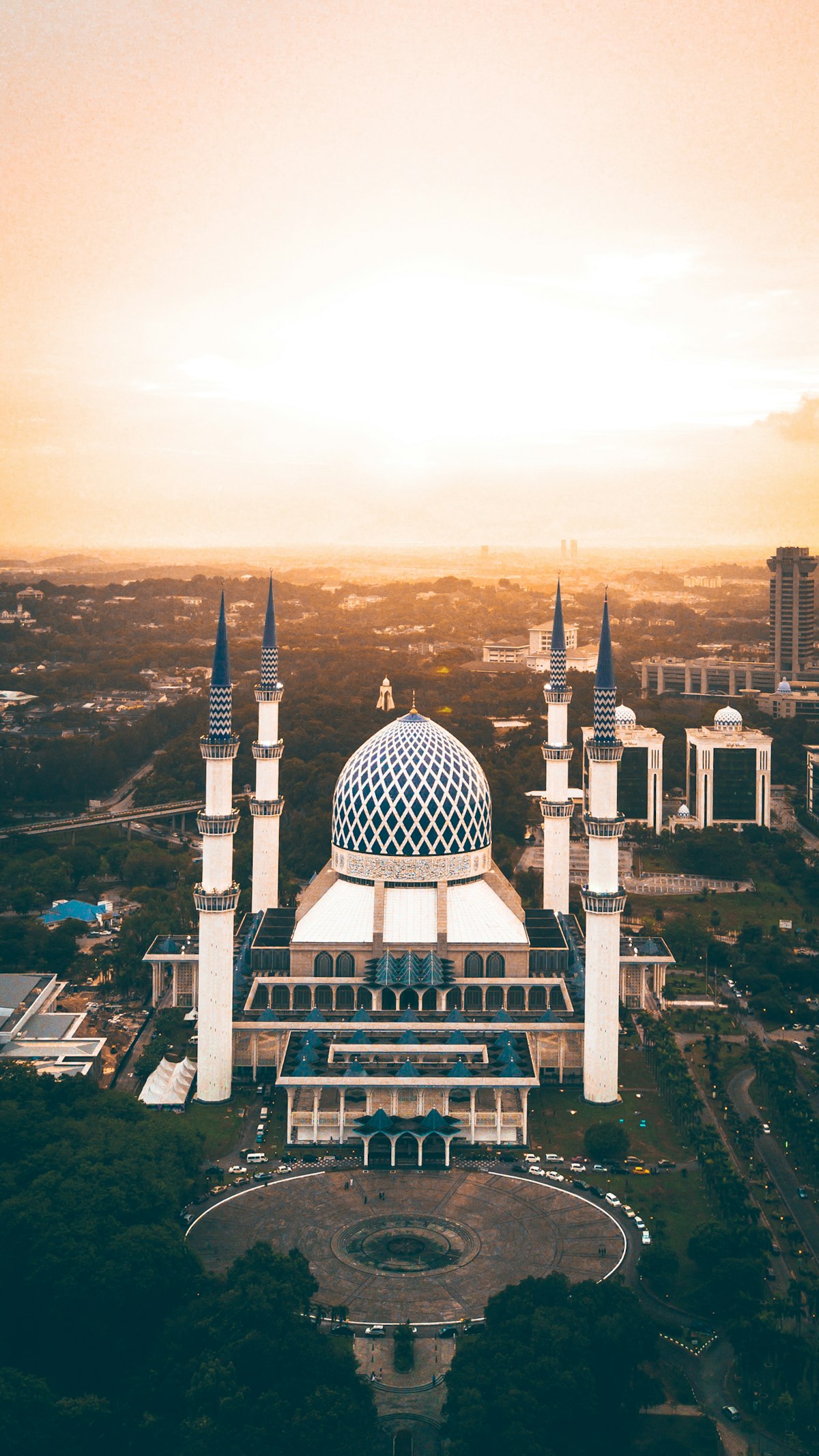
Salah (also spelled Salat) is the second Pillar of Islam and the most important act of worship a Muslim performs daily. It is a direct connection between the believer and Allah (SWT), performed five times each day at prescribed times. The Prophet Muhammad (PBUH) said: “The first matter that the slave will be brought to account for on the Day of Judgement is the prayer.” (An-Nasa’i)
The Five Daily Prayers and Their Times
- Fajr – The pre-dawn prayer (2 Rak’ahs), performed between dawn and sunrise
- Dhuhr – The midday prayer (4 Rak’ahs), performed after the sun passes its highest point
- Asr – The afternoon prayer (4 Rak’ahs), performed in the afternoon
- Maghrib – The sunset prayer (3 Rak’ahs), performed just after sunset
- Isha – The night prayer (4 Rak’ahs), performed after dusk
For accurate UK prayer times, visit our UK Salah Times and Prayer Timetables page.
Pre-Conditions for Salah
Before beginning Salah, certain conditions must be met:
- Wudu (Ablution): Ritual purification with water — washing the face, hands and forearms, wiping the head, and washing the feet
- Clean Body and Clothing: Free from all physical impurities (Najasah)
- Clean Prayer Space: A clean area, often using a prayer mat
- Facing Qibla: The direction of the Kaaba in Makkah, Saudi Arabia
- Covering the ‘Awrah: For men, from the navel to the knee; for women, the entire body except the face and hands
- Niyyah (Intention): A sincere intention in the heart for which prayer you are performing
Step-by-Step Guide to Performing Salah
Here is a simplified step-by-step guide to performing one complete Rak’ah of Salah:
1. Takbiratul Ihram (Opening Takbir)
Stand upright facing the Qibla. Raise both hands to ear level (or shoulder level) and say: “Allahu Akbar” (Allah is the Greatest). This is the opening of the prayer.
2. Qiyam (Standing)
Place your right hand over your left hand on your chest. Recite the opening supplication (Dua al-Istiftah), followed by Surah Al-Fatiha, and then any additional Surah or verses from the Quran.
3. Ruku (Bowing)
Say “Allahu Akbar” and bow until your back is parallel to the ground, placing hands on the knees. Recite: “Subhana Rabbial Adheem” (Glory be to my Lord, the Most Great) at least three times. Then rise saying: “Sami’a Allahu liman Hamidah” (Allah hears those who praise Him), followed by “Rabbana wa lakal hamd”.
4. Sujood (Prostration)
Say “Allahu Akbar” and prostrate with seven body parts touching the ground: forehead and nose, both palms, both knees, and both feet (toes). Recite: “Subhana Rabbial A’la” (Glory be to my Lord, the Most High) at least three times. Rise briefly to sit between the two prostrations, then perform a second Sujood.
5. Tashahhud (Sitting Testimony)
After completing the required Rak’ahs, sit and recite the Tashahhud and send blessings upon the Prophet (Salawat) while pointing the right index finger.
6. Tasleem (Ending the Prayer)
Conclude the prayer by turning your head to the right and saying “Assalamu Alaikum wa Rahmatullah”, then to the left and repeating. This completes your prayer.
Common Mistakes in Salah
- Rushing through the prayer without proper stillness (Tuma’ninah)
- Not properly straightening the back during Ruku
- Not placing all seven limbs on the ground during Sujood
- Praying with impure clothing or without Wudu
- Losing focus and concentration (Khushu) — strive to be present in every prayer
The Importance of Salah in Islam
Salah is the pillar of the religion. The Prophet (PBUH) said: “The head of the matter is Islam, its pillar is the prayer, and the highest point is jihad.” (Tirmidhi). It was the first obligation given directly by Allah (SWT) to the Prophet Muhammad (PBUH) during the blessed Night of Al-Isra wal-Mi’raj. Salah is performed in congregation (Jama’ah) whenever possible, which increases the reward twenty-seven times compared to praying alone.
Conclusion
Learning how to perform Salah correctly is a lifelong journey of spiritual growth. The key is sincerity, consistency, and continuous improvement. May Allah (SWT) accept all our prayers and grant us deep khushu (focus and humility) in our Salah. Ameen.